Receiving a quote for dent repair can sometimes come as a surprise. What appears to be a small dent on your vehicle may result in a repair estimate that is much higher than expected. It’s understandable to wonder, “Why is my dent repair quote so expensive?”
The reality is that dent repair pricing is influenced by far more than the size of the dent. A professional technician considers the location of the damage, the condition of the paint, the type of vehicle, accessibility, repair complexity, labour involved, and the techniques required to achieve a high-quality finish.
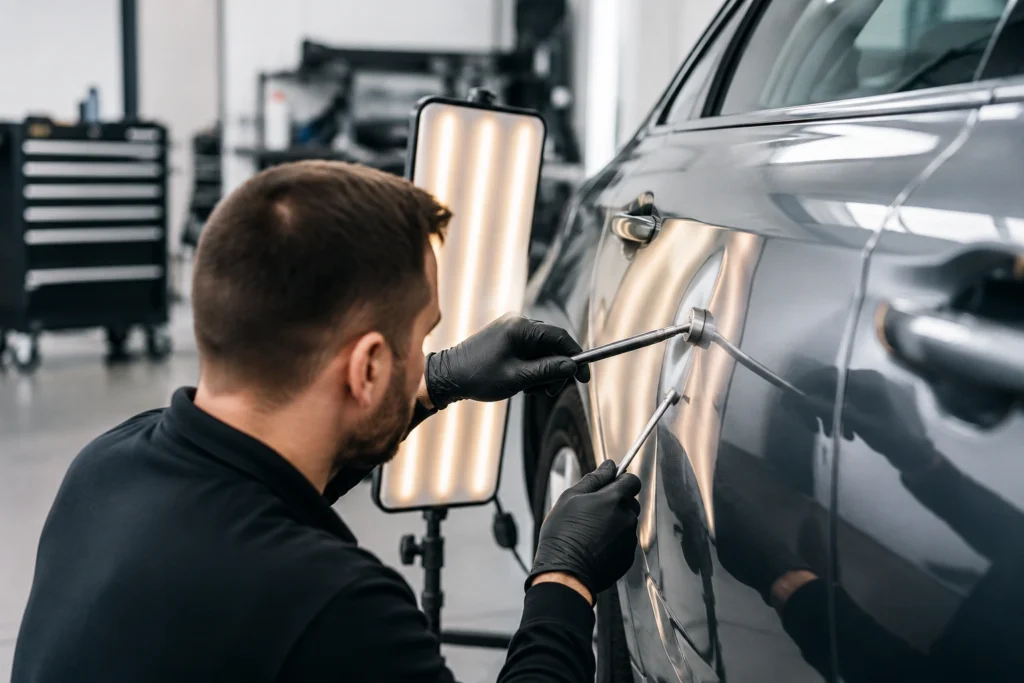
In many cases, what seems like a simple dent can require several hours of skilled work using specialised equipment. Likewise, some dents that appear severe may actually be repaired more efficiently using Paintless Dent Repair (PDR), reducing both labour and material costs.
This blog explains the key factors that affect dent repair costs, why quotes can vary significantly between repairers, and what you should consider before choosing the cheapest option.
Why is my dent repair quote so expensive?
A dent repair quote reflects more than the visible damage. Factors such as the dent’s size, depth, location, paint condition, panel accessibility, repair method, vehicle type and technician expertise all influence the final cost. While some dents can be repaired quickly using Paintless Dent Repair, others require more time and specialised techniques to restore the vehicle properly.
What Determines the Cost of Dent Repair?
Every dent is different, which means every repair requires an individual assessment.
Professional technicians evaluate several factors before preparing a quotation.
1. The Size of the Dent
Larger dents generally require more time to repair.
However, size alone doesn’t determine the price.
A large shallow dent may actually be easier to repair than a small sharp crease because the metal has not been significantly stretched.
This is why two dents of similar size can have very different repair costs.
2. The Location of the Damage
The position of the dent plays a major role in repair complexity.
Some areas of a vehicle are easy to access, while others require significant disassembly before repairs can begin.
More challenging locations include:
- Door edges
- Wheel arches
- Roof rails
- Reinforced body lines
- Rear quarter panels
- Structural supports
Limited access increases labour time, which naturally affects the quotation.
3. Has the Paint Been Damaged?
One of the most important considerations is the condition of the paint.
If the factory paint remains intact, Paintless Dent Repair may be suitable.
However, if the paint has:
- Cracked
- Chipped
- Peeled
- Exposed bare metal
Traditional body repairs involving sanding, filling and repainting may be required.
These additional processes increase both labour and material costs.
4. The Depth and Severity of the Dent
A shallow dent is often much easier to repair than a sharp impact.
Deep dents usually stretch the metal, making restoration more complex.
Technicians must gradually reshape the panel while ensuring the surrounding paint is not damaged.
This level of precision requires skill, experience and time.
5. Vehicle Make and Model
Not every vehicle is built the same.
Luxury vehicles, prestige brands and newer models often feature:
- Aluminium body panels
- High-strength steel
- Complex panel designs
- Advanced safety systems
These materials require specialised repair techniques and equipment, which may increase repair costs.
Why Labour Makes Up Most of the Cost
Many people assume they are paying mainly for tools or materials.
In reality, professional dent repair is a highly skilled trade.
An experienced technician spends years developing the ability to reshape damaged metal without creating high spots, low spots or damaging the paint.
When you receive a quotation, much of the cost reflects:
- Technical expertise
- Repair time
- Precision workmanship
- Specialist training
- Professional equipment
Rather than replacing damaged panels unnecessarily, skilled technicians work carefully to preserve the original factory finish whenever possible.
Why Paintless Dent Repair Can Sometimes Save Money
Although some people believe Paintless Dent Repair is expensive, it is often one of the most cost-effective repair methods available.
Because PDR avoids:
- Sanding
- Body filler
- Primer
- Colour matching
- Repainting
- Clear coating
It usually reduces both labour and material costs.
It also allows your vehicle to retain its original factory paint, which helps maintain resale value.
When a dent qualifies for Paintless Dent Repair, it is often less expensive than conventional body repairs.
Why Quotes Can Vary Between Repairers
It isn’t unusual to receive several different quotations for the same dent.
This doesn’t necessarily mean one repairer is overcharging.
Different businesses may recommend different repair methods based on their experience and available equipment.
For example:
- One repairer may recommend replacing the panel.
- Another may suggest conventional repairs.
- A Paintless Dent Repair specialist may be able to restore the original panel without repainting.
The repair approach directly affects the quotation.
When comparing quotes, it’s important to understand what work is actually included rather than focusing solely on the final price.
Why the Cheapest Quote Isn’t Always the Best
Choosing the lowest quote can sometimes cost more in the long run.
Poor-quality repairs may result in:
- Uneven panels
- Visible repair marks
- Incorrect paint colour
- Paint peeling
- Reduced resale value
- Additional repairs later
A quality repair aims to restore your vehicle properly the first time.
Professional technicians invest in ongoing training, specialist tools and proven repair methods to achieve reliable results.
The Value of Preserving Your Factory Paint
Your vehicle’s original paint is applied under tightly controlled factory conditions.
Once a panel is repainted, matching the original finish perfectly can be challenging.
Preserving the factory paint offers several benefits:
- Consistent colour
- Better resale value
- Original manufacturer finish
- Reduced risk of future paint issues
- No unnecessary blending into adjacent panels
Whenever suitable, Paintless Dent Repair helps maintain these advantages.
Why a Professional Assessment Matters
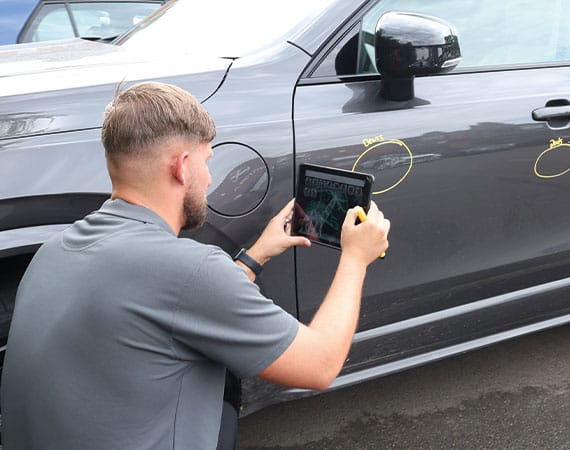
Photographs can provide an initial indication of damage, but they rarely tell the full story.
Experienced technicians inspect:
- Dent depth
- Metal stretch
- Paint condition
- Panel construction
- Accessibility
- Previous repairs
Only after a proper assessment can an accurate quotation be prepared.
This ensures the recommended repair method is appropriate for your vehicle rather than based on assumptions.
Is Dent Repair Worth the Cost?
For many vehicle owners, the answer is yes.
Repairing dents promptly can:
- Improve your vehicle’s appearance
- Protect resale value
- Prevent cosmetic damage from worsening
- Maintain pride of ownership
- Avoid more extensive repairs later
A professional repair is an investment in preserving both the condition and value of your vehicle.
Why Melbourne Drivers Choose Professional Mobile Dent Repair
Melbourne drivers increasingly choose mobile dent repair because it combines convenience with professional workmanship.
Rather than leaving your vehicle at a body shop for several days, many eligible dents can be repaired at your:
- Home
- Workplace
- Business premises
- Fleet location
This saves time while delivering high-quality cosmetic repairs that preserve the factory finish wherever possible.
How to Choose the Right Dent Repair Provider
Before accepting a quotation, consider more than the price alone.
Look for a repairer who offers:
- Experience in Paintless Dent Repair
- Honest advice about suitable repair methods
- Clear explanations of the quotation
- Mobile repair options if appropriate
- Positive customer reviews
- Quality workmanship
- Transparent pricing
Choosing an experienced professional helps ensure your vehicle receives the right repair rather than simply the cheapest one.
Conclusion
If you’ve been asking, “Why is my dent repair quote so expensive?”, it’s important to remember that a professional quotation reflects far more than the visible dent itself.
Factors such as the dent’s location, paint condition, accessibility, vehicle construction, repair complexity and technician expertise all contribute to the final price. In many cases, a higher quote represents the time, skill and precision required to restore your vehicle properly while preserving its original finish.
Rather than comparing quotations on price alone, focus on the repair method, the experience of the technician and the quality of the workmanship being offered. A professional repair completed correctly the first time can protect your vehicle’s appearance, maintain its resale value and save you from costly corrective work in the future.
Frequently Asked Questions
1. Why can a small dent cost so much to repair?
A small dent may be located in a difficult-to-access area or require several hours of precise work. The repair cost reflects the skill, time and techniques needed rather than the dent’s size alone.
2. Is Paintless Dent Repair always cheaper than traditional repairs?
Not always, but when the paint remains intact, Paintless Dent Repair is often more cost-effective because it avoids sanding, fillers, repainting and colour matching.
3. Why do different repairers give different quotes?
Different repairers may recommend different repair methods. Some may suggest replacing or repainting panels, while a Paintless Dent Repair specialist may be able to restore the original panel without repainting.
4. Should I choose the cheapest dent repair quote?
Not necessarily. A low quote may not include the same quality of workmanship or repair method. It’s important to compare what’s included, not just the price.
5. Can a professional assessment provide a more accurate quote?
Yes. A hands-on inspection allows technicians to assess paint condition, metal stretch, accessibility and repair complexity, ensuring the quotation accurately reflects the work required.