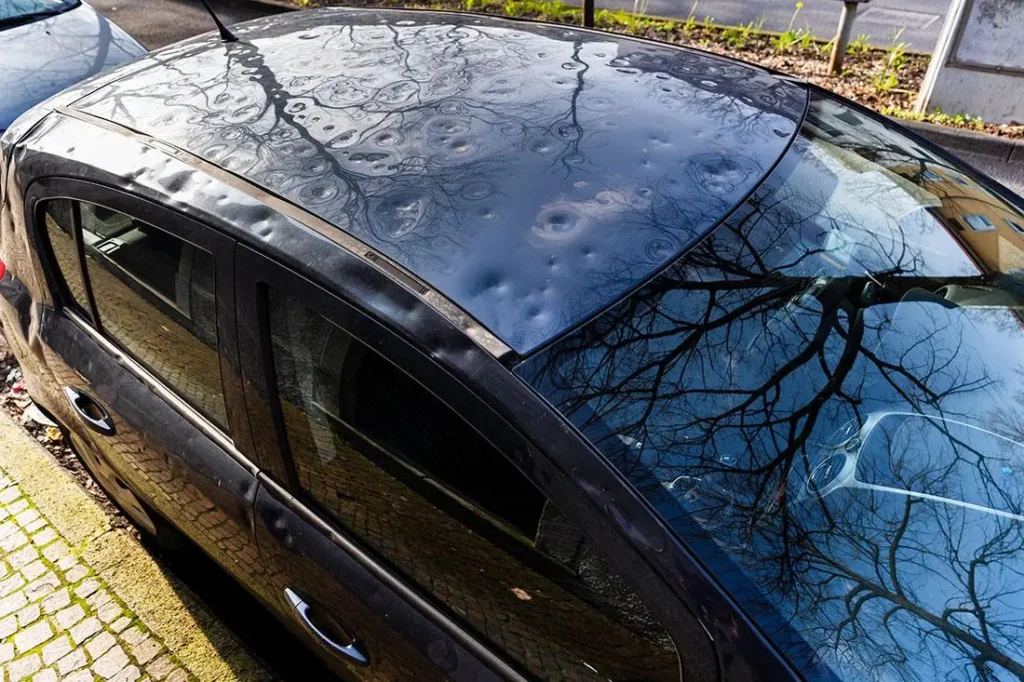
Hailstorms can arrive with little warning and leave your vehicle covered in dents within minutes. If you’re asking, “My Car Was Damaged By Hail — What Should I Do?”, acting quickly can help prevent further issues, simplify the insurance process, and improve the chances of a cost-effective repair.
While hail damage often appears cosmetic, multiple dents across the bonnet, roof, boot, and doors can reduce your vehicle’s resale value and, in some cases, affect panel integrity. The good news is that many hail dents can be repaired using Paintless Dent Repair (PDR), a specialised technique that restores panels without sanding, filling, or repainting.
This blog explains the steps to take after a hailstorm, how insurance claims work, and when professional hail damage repair is the best solution.
Assess the Damage Safely
Your first priority should always be safety. Wait until the storm has completely passed before inspecting your vehicle.
Look for signs such as:
- Small or large dents across body panels
- Damage to the bonnet, roof, and boot lid
- Cracked or chipped paint
- Broken mirrors or lights
- Cracked windscreens or windows
Avoid climbing onto the vehicle or attempting to press dents out yourself. Modern vehicle panels are engineered differently, and DIY repairs can easily make the damage worse.
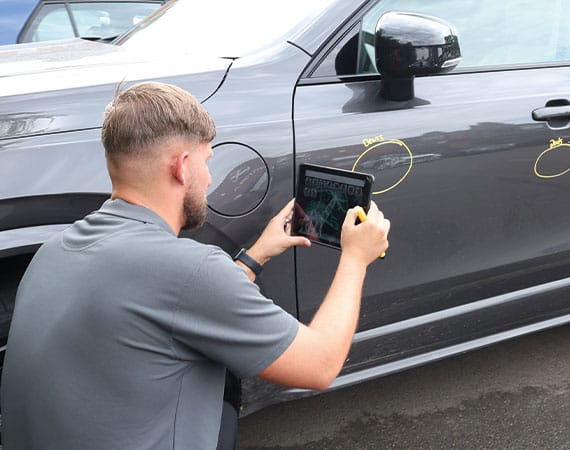
Taking clear photographs from multiple angles will help document the condition of your vehicle for both repair estimates and insurance claims.
Check Whether the Paint Has Been Damaged
One of the most important factors in choosing the right repair method is whether the factory paint remains intact.
If the dents are shallow and the paint hasn’t cracked or chipped, your vehicle may be suitable for Paintless Dent Repair (PDR).
PDR works by carefully massaging the damaged metal back into its original shape from behind the panel. Because the original paint is preserved, the repair maintains the manufacturer’s finish while avoiding colour matching or repainting.
However, if hail has caused deep impacts that have cracked the paint or severely stretched the metal, conventional body repairs may be required.
Contact Your Insurance Provider
If you have comprehensive vehicle insurance, hail damage is often covered under your policy.
Before arranging repairs:
- Notify your insurer as soon as possible.
- Provide photographs of the damage.
- Record the date and location of the hailstorm.
- Obtain a repair assessment if requested.
- Keep copies of all correspondence.
Some insurers may recommend approved repairers, while others allow you to choose your own qualified repair specialist.
Understanding your policy excess and claim requirements can help you avoid unexpected costs.
Arrange a Professional Hail Damage Assessment
Not every dent is immediately visible after a hailstorm.
Professional technicians use specialised lighting and reflection boards to identify both obvious and hidden dents that may not be noticeable under normal daylight conditions.
A thorough inspection helps determine:
- The number of dents
- Their size and location
- Whether PDR is suitable
- Estimated repair time
- Overall repair costs
An accurate assessment ensures the repair plan is tailored to your vehicle’s specific damage.
Consider Paintless Dent Repair (PDR)
For many hail-damaged vehicles, Paintless Dent Repair is the preferred repair method.
Benefits of Paintless Dent Repair include:
- Preserves the original factory paint
- No fillers or repainting required
- Maintains vehicle resale value
- Faster than conventional body repairs
- Environmentally friendly
- Suitable for many hail dents where paint remains intact
Because no repainting is required, the repaired panels retain their original finish, making PDR an excellent option for modern vehicles.
Avoid Delaying Repairs
Although hail dents may seem purely cosmetic, delaying repairs can create additional problems.
Damaged panels may become more difficult to repair if left untreated for long periods, especially if corrosion develops where paint has been compromised.
Repairing hail damage promptly can also:
- Help maintain your vehicle’s value.
- Prevent further deterioration.
- Simplify insurance processing.
- Restore the appearance of your vehicle sooner.
If your insurer has claim deadlines, acting quickly also reduces the risk of complications.
Choose an Experienced Repair Specialist
Not every dent repair business specialises in hail damage.
Look for technicians with experience in:
- Large-scale hail damage repairs
- Paintless Dent Repair techniques
- Insurance repair processes
- Modern vehicle panel construction
- Mobile or workshop repair services
Experienced technicians understand how different metals respond to impact and use specialised tools to achieve high-quality results while protecting the original finish.
Can Every Hail-Damaged Car Be Repaired with PDR?
Not always.
Paintless Dent Repair is most effective when:
- The paint remains intact.
- The dents are not excessively deep.
- The metal has not been severely stretched.
- The panel is accessible using specialised tools.
Vehicles with cracked paint, torn metal, or significant structural damage may require traditional panel repairs instead.
A professional inspection is the only reliable way to determine the most appropriate repair method.
Protect Your Vehicle from Future Hailstorms
While hail cannot always be avoided, there are practical ways to reduce the risk of future damage.
Consider:
- Parking inside a garage whenever possible.
- Using covered parking areas during severe weather.
- Monitoring weather forecasts before travelling.
- Investing in a quality hail protection cover if severe storms are forecast.
Preparing in advance can significantly reduce the likelihood of costly repairs.
Conclusion
If you’re wondering “My Car Was Damaged By Hail — What Should I Do?”, the key is to act promptly. Document the damage, understand your insurance options, and arrange a professional assessment as soon as possible. For many vehicles, Paintless Dent Repair offers an efficient solution that restores the appearance of the car while preserving its factory finish.
Choosing an experienced hail damage repair specialist ensures the damage is accurately assessed and repaired using the most suitable technique, helping protect both your vehicle’s appearance and long-term value.
Frequently Asked Questions
1. Does car insurance usually cover hail damage?
Most comprehensive vehicle insurance policies cover hail damage, although cover, excess amounts, and claim procedures vary between insurers. Always check your policy for specific details.
2. Can hail dents be repaired without repainting?
Yes. If the factory paint has not been damaged, many hail dents can be repaired using Paintless Dent Repair (PDR), which restores the panel without fillers or repainting.
3. How long does hail damage repair take?
Repair time depends on the number, size, and location of the dents. Minor hail damage may be completed within a day, while extensive damage can take longer.
4. Should I repair hail damage immediately?
Yes. Prompt repairs help preserve your vehicle’s value, prevent further deterioration where paint is damaged, and can make the insurance claim process smoother.
5. Is every hail-damaged vehicle suitable for Paintless Dent Repair?
No. PDR is suitable when the paint remains intact and the metal has not been severely stretched. Vehicles with cracked paint or structural damage may require conventional body repairs.