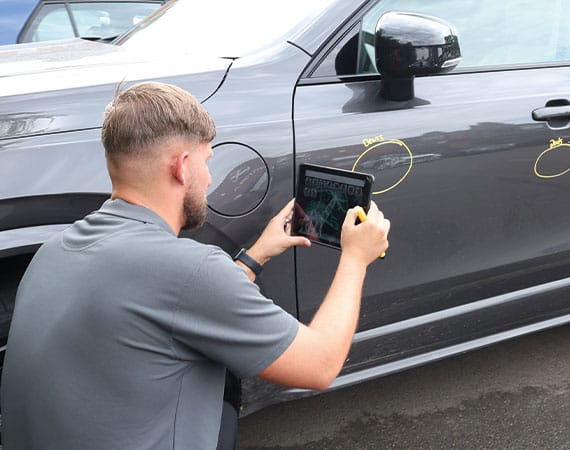

Whether you’ve discovered a door ding in a supermarket car park, a shopping trolley dent, or minor hail damage, one of the first questions you’ll likely ask is whether to choose mobile dent repair or a traditional workshop repair.
Both repair methods have their advantages, but the right choice depends on the type of damage, the repair technique required, and your expectations regarding convenience, cost, and finish.
At Marks Dent Repairs, we assess a wide variety of dents across Melbourne every week. While many minor dents can be repaired professionally at a customer’s home or workplace using Paintless Dent Repair (PDR), more extensive damage may require workshop-based repairs.
This blog explains the differences between mobile dent repair vs workshop repairs, helping you make an informed decision.
What Is Mobile Dent Repair?
Mobile dent repair is a professional service where qualified technicians travel to your location to repair suitable dents without requiring you to visit a body shop.
Using specialised Paintless Dent Repair (PDR) tools, technicians carefully reshape damaged panels from behind the metal, restoring their original appearance while preserving the factory paint.
Mobile dent repair is commonly used for:
- Door dents
- Shopping trolley dents
- Car park damage
- Minor crease dents
- Suitable hail damage
- Small impact dents
One of the biggest advantages is convenience, as repairs can often be completed while you’re at home or work.
What Are Workshop Repairs?
Traditional workshop repairs involve taking your vehicle to a body repair facility where technicians repair or replace damaged panels.
These repairs often include:
- Filling damaged areas
- Sanding panels
- Priming
- Colour matching
- Repainting
- Clear coat application
Workshop repairs remain the best solution when damage extends beyond what Paintless Dent Repair can safely restore.
Mobile Dent Repair vs Workshop Repairs
| Mobile Dent Repair | Workshop Repairs |
| Repairs completed at your location | Vehicle taken to a repair workshop |
| Preserves factory paint where suitable | Usually involves repainting |
| No fillers required | Fillers often required |
| Ideal for minor dents | Suitable for major collision damage |
| Less disruption to your day | Vehicle may remain in the workshop for several days |
| Environmentally friendly | Higher material usage |
The best repair method always depends on the condition of the damaged panel rather than personal preference alone.
When Mobile Dent Repair Is the Better Choice
Mobile repair is often recommended when:
- The paint remains intact.
- The dent is relatively shallow.
- The metal hasn’t been excessively stretched.
- Access behind the panel is available.
- No structural damage is present.
In our experience repairing everyday dents across Melbourne, many door dings, shopping trolley dents and minor car park impacts can be restored successfully using Paintless Dent Repair, helping owners retain their vehicle’s original factory finish.
When a Workshop Repair Is Necessary
Although Paintless Dent Repair is highly effective, it isn’t suitable for every repair.
Workshop repairs are generally required when:
- Paint has cracked or chipped.
- The panel has torn.
- The dent is extremely deep.
- The impact has distorted panel alignment.
- Structural components have been damaged.
- Replacement panels are required.
A professional assessment ensures the most appropriate repair method is recommended rather than attempting a repair that may compromise the final result.
Cost Considerations
Repair costs vary depending on several factors, including:
- Dent size
- Number of dents
- Panel location
- Vehicle make and model
- Accessibility
- Whether repainting is required
Because mobile dent repair often avoids repainting, fillers and replacement panels, it can be a cost-effective option for suitable dents.
However, choosing the cheapest repair isn’t always the best decision. Quality workmanship and technician experience play an important role in achieving a lasting result.
Convenience Matters
One of the main reasons vehicle owners choose mobile dent repair is convenience.
Rather than arranging transport to a workshop or being without your vehicle for several days, a mobile technician comes directly to your:
- Home
- Workplace
- Business premises
- Fleet depot
This minimises disruption while allowing repairs to be completed where practical.
For busy professionals, families and fleet operators, mobile repairs often provide significant time savings.
Which Repair Method Preserves Vehicle Value?
Maintaining your vehicle’s original factory finish is an important factor in protecting resale value.
Where suitable, Paintless Dent Repair offers several advantages because it:
- Preserves original paint.
- Avoids colour matching.
- Maintains manufacturer finishes.
- Reduces the risk of paint mismatch.
- Retains more of the vehicle’s originality.
For collectors, prestige vehicles and newer cars, preserving the factory finish is often a significant benefit.
Choosing the Right Dent Repair Specialist
Whether you choose mobile or workshop repairs, selecting an experienced repair specialist is essential.
Look for technicians who:
- Specialise in Paintless Dent Repair.
- Have experience with various vehicle makes.
- Assess every dent individually.
- Explain suitable repair options clearly.
- Use professional repair equipment.
- Prioritise preserving the factory finish whenever possible.
At Marks Dent Repairs, every assessment considers the dent size, panel construction, paint condition and accessibility before recommending the most suitable repair method.
Conclusion
Choosing between mobile dent repair vs workshop repairs depends on the nature of the damage rather than simply the location of the repair.
For many everyday dents, including door dings, shopping trolley impacts and minor car park damage, Paintless Dent Repair provides an efficient solution that preserves the factory paint while eliminating the inconvenience of visiting a workshop.
However, when dents involve paint damage or structural repairs, a professional workshop remains the appropriate choice. Having your vehicle assessed by an experienced dent repair specialist ensures you receive the most suitable repair recommendation based on the condition of your vehicle.
Frequently Asked Questions
1. Is mobile dent repair as good as workshop repairs?
For suitable dents where the paint remains intact, mobile Paintless Dent Repair can achieve results comparable to workshop repairs while preserving the original factory finish.
2. Can all dents be repaired by a mobile technician?
No. Deep dents, structural damage, torn metal or cracked paint may require traditional workshop repairs and repainting.
3. Does mobile dent repair take less time?
In many cases, yes. Minor dents can often be repaired within a few hours, whereas workshop repairs involving repainting may take several days.
4. Is Paintless Dent Repair cheaper than traditional body repairs?
For suitable dents, Paintless Dent Repair is often more cost-effective because it avoids fillers, repainting and replacement panels.
5. Which repair method is best for maintaining resale value?
Where appropriate, Paintless Dent Repair helps preserve the original factory paint, which can support your vehicle’s appearance and resale value.