Discovering a dent on your vehicle can be frustrating, whether it happened in a supermarket car park, outside your workplace, or during a sudden hailstorm. One of the first questions most vehicle owners ask is, “Can this dent be fixed without repainting?”
The answer is often yes – provided the damage meets certain conditions. Thanks to advancements in Paintless Dent Repair (PDR), many minor dents can now be removed without sanding, filling, or repainting the affected panel. This modern repair technique preserves your vehicle’s factory paint finish, helping maintain its appearance and resale value while reducing repair time and costs.
However, not every dent is suitable for this method. The location, depth, size of the dent, and condition of the paint all influence whether dent repair without repainting is possible.
In this guide, we’ll explain how Paintless Dent Repair works, which dents are suitable for repair, when repainting is necessary, and why professional assessment is essential before choosing the right repair solution.
What Is Paintless Dent Repair?
Paintless Dent Repair (PDR) is a specialised technique used to restore damaged vehicle panels without affecting the original paintwork.
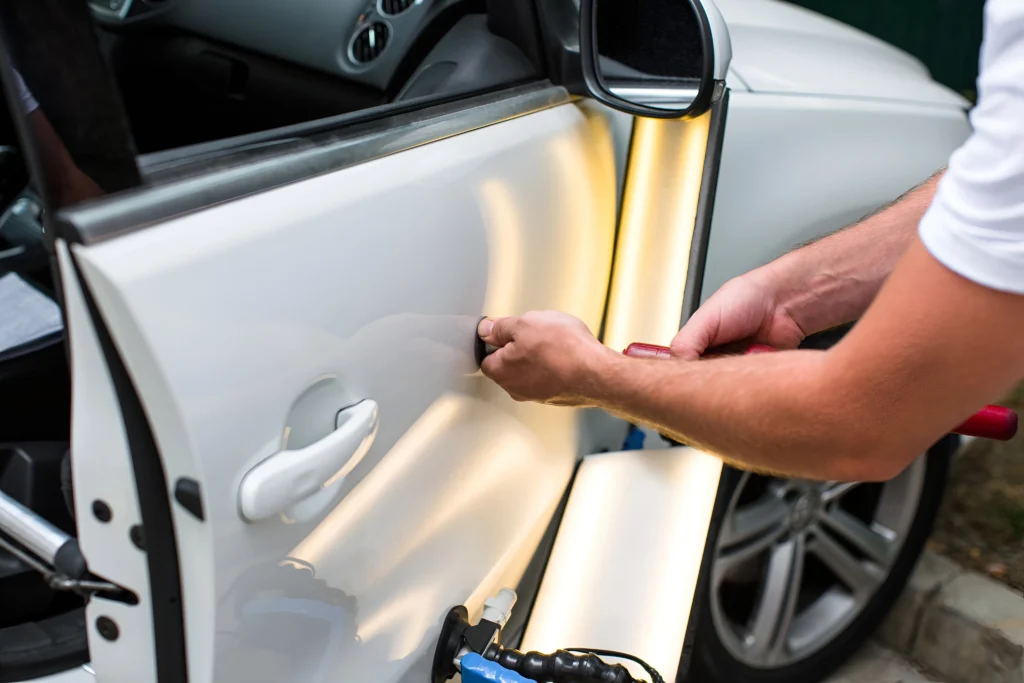
Instead of using traditional body repair methods such as sanding, body filler, primer, and repainting, skilled technicians use specialised tools to carefully massage the dented metal back into its original shape from behind the panel or, where appropriate, with precision glue-pulling techniques.
Because the factory paint remains untouched, the repaired panel retains its original finish, making PDR one of the most effective methods for repairing eligible cosmetic dents.
Paintless Dent Repair is commonly used for:
- Door dents
- Shopping trolley dents
- Minor parking dents
- Hail damage
- Small impact dents
- Bonnet and roof dents
Can Every Dent Be Fixed Without Repainting?
The simple answer is no.
While Paintless Dent Repair can successfully restore many types of dents, it is not suitable for every situation.
Several factors determine whether a dent can be repaired without repainting, including:
- Whether the paint has been damaged
- The depth of the dent
- How much the metal has stretched
- The location of the damage
- Accessibility behind the panel
- Previous repairs on the affected area
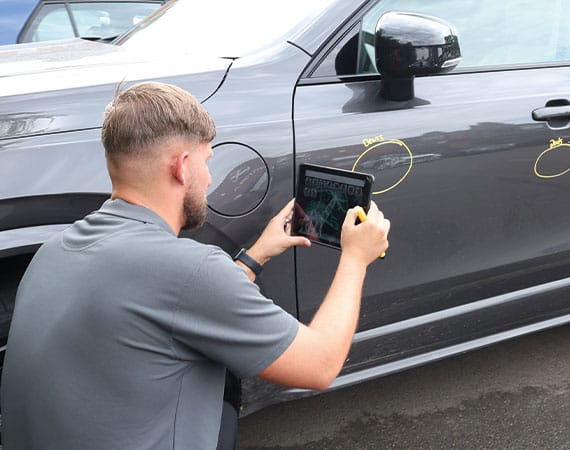
A professional inspection is always the best way to determine whether your dent qualifies for PDR.
How Do Professionals Determine If a Dent Can Be Repaired?
Experienced PDR technicians assess several important factors before recommending a repair method.
1. The Paint Must Remain Intact
One of the biggest requirements for Paintless Dent Repair is an undamaged paint surface.
If the paint has:
- Cracked
- Chipped
- Peeled
- Exposed bare metal
traditional body repairs may be necessary.
Modern automotive paint is surprisingly flexible, allowing many dents
2. Dent Depth
Shallow dents respond much better to PDR than deep impacts.
The deeper the dent, the more likely the metal has stretched beyond its original shape, making complete restoration more difficult.
3. Metal Stretch
Vehicle panels naturally flex when impacted.
If the metal has only been displaced – not permanently stretched – technicians can often return it to its original position using specialised tools.
Severely stretched metal may require conventional repair techniques.
4. Dent Location
The location of the dent also matters.
Panels with good rear access are generally easier to repair.
Technicians often repair dents found on:
- Doors
- Front guards
- Rear quarter panels
- Bonnets
- Boot lids
- Roof panels
Dents located on sharp body lines or reinforced panel edges may require additional skill and assessment.
5. Accessibility
Paintless Dent Repair requires access behind the damaged panel or the ability to use specialised glue-pulling techniques.
If internal bracing or structural components block access, repair options may become more limited.
Common Types of Dents That Can Often Be Fixed Without Repainting
Many everyday dents are ideal candidates for dent repair without repainting.
Door Dents
Door dents are among the most common vehicle repairs.
They typically occur when another vehicle opens its door into yours in crowded parking areas.
If the paint remains undamaged, these dents can often be repaired using PDR.
Shopping Trolley Dents
Shopping trolley impacts frequently cause small dents along doors and side panels.
Because these dents usually don’t damage the paint, they are often suitable for Paintless Dent Repair.
Hail Damage
Hailstorms can leave dozens of dents across a vehicle while leaving the paint untouched.
This makes hail damage repair one of the most common applications for Paintless Dent Repair.
Minor Parking Dents
Low-speed impacts from reversing vehicles, parking poles, or garage mishaps often create cosmetic dents that can be repaired without repainting.
Bonnet and Roof Dents
Falling branches, small debris, and hailstones commonly affect bonnet and roof panels.
Provided the paint remains intact, many of these dents can be successfully restored.
When Is Repainting Necessary?
Although PDR offers many benefits, some damage requires traditional body repairs.
Repainting may be necessary if:
- Paint has cracked or chipped
- Bare metal is exposed
- Rust has formed
- The panel has torn
- The dent has created sharp creases
- The metal has stretched significantly
- Previous body repairs affect the repair area
- Collision damage has distorted the panel
In these situations, sanding, filling, and repainting help restore both appearance and structural integrity.
Why Preserving Factory Paint Is So Important
One of the greatest advantages of Paintless Dent Repair is preserving your vehicle’s original factory finish.
Factory paint is applied under highly controlled manufacturing conditions and is generally more durable than aftermarket paintwork.
Keeping the original finish intact offers several benefits:
- Better resale value
- Original manufacturer appearance
- No colour matching issues
- Reduced risk of paint peeling
- No blending into neighbouring panels
- Better long-term durability
For many vehicle owners, protecting the original paint is just as important as removing the dent itself.
Benefits of Dent Repair Without Repainting
Choosing Paintless Dent Repair offers numerous advantages over conventional repair methods.
Faster Repairs
Many minor dents can be repaired within a few hours instead of leaving your vehicle in a workshop for several days.
Lower Repair Costs
Since there is no need for fillers, paint, primer, sanding, or colour matching, repair costs are often significantly lower.
Preserves Original Paint
Your vehicle retains its factory finish, helping maintain both appearance and resale value.
Environmentally Friendly
Because no paints or solvents are used, Paintless Dent Repair produces less waste and fewer emissions than traditional repairs.
Convenient Mobile Service
Many providers, including Marks Dent Repairs, offer mobile paintless dent repair, allowing repairs to be completed at your home or workplace.
Why Professional Assessment Matters
While DIY dent removal kits are widely available, they rarely provide the same results as professional repairs.
Attempting to repair a dent without the proper knowledge or equipment can:
- Crack the paint
- Stretch the metal
- Create high spots
- Make professional repairs more difficult
- Increase repair costs
Experienced PDR technicians use specialised lighting and precision tools to monitor even the smallest changes in the panel during the repair process.
A professional assessment ensures you receive honest advice about whether your dent is suitable for Paintless Dent Repair or whether another repair method is more appropriate.
Why Melbourne Drivers Choose Paintless Dent Repair
Vehicle owners across Melbourne increasingly choose mobile paintless dent repair because it offers convenience, affordability, and outstanding cosmetic results.
Whether your vehicle has suffered:
- Door dents
- Shopping trolley damage
- Minor parking dents
- Hail damage
PDR often provides the fastest and least invasive solution.
By repairing eligible dents without repainting, vehicle owners can restore their cars while preserving the original factory finish and avoiding lengthy workshop visits.
Conclusion
If you’ve been asking, “Can this dent be fixed without repainting?”, the answer is that many dents can – provided the paint remains intact and the damage is suitable for Paintless Dent Repair.
PDR is an effective solution for many everyday dents, including door dings, shopping trolley damage, hail dents, and minor parking impacts. It preserves your vehicle’s factory paint, reduces repair time, lowers costs, and helps maintain resale value.
However, every dent is unique. The best way to determine the right repair method is through a professional assessment by an experienced technician. By choosing expert advice and proven repair techniques, you can ensure your vehicle receives the most appropriate care while achieving the best possible cosmetic result.
Frequently Asked Questions
1. Can all dents be repaired without repainting?
No. Paintless Dent Repair is suitable only when the paint is intact and the metal has not been excessively stretched or damaged. A professional inspection is needed to determine eligibility.
2. How do I know if my dent qualifies for Paintless Dent Repair?
A technician will inspect the dent’s size, depth, location, paint condition, and accessibility before recommending whether Paintless Dent Repair is the right solution.
3. Does Paintless Dent Repair damage the original paint?
No. When performed by trained professionals, Paintless Dent Repair is specifically designed to preserve the original factory paint finish.
4. Is Paintless Dent Repair suitable for hail damage?
Yes. Hail damage is one of the most common uses for Paintless Dent Repair because hail often dents the metal without damaging the paint.
5. Why should I choose professional Paintless Dent Repair instead of a DIY dent removal kit?
Professional technicians have specialised tools, training, and experience to restore dents accurately without causing additional damage. DIY repairs can worsen the dent or crack the paint, leading to more expensive repairs later.